Identity Security

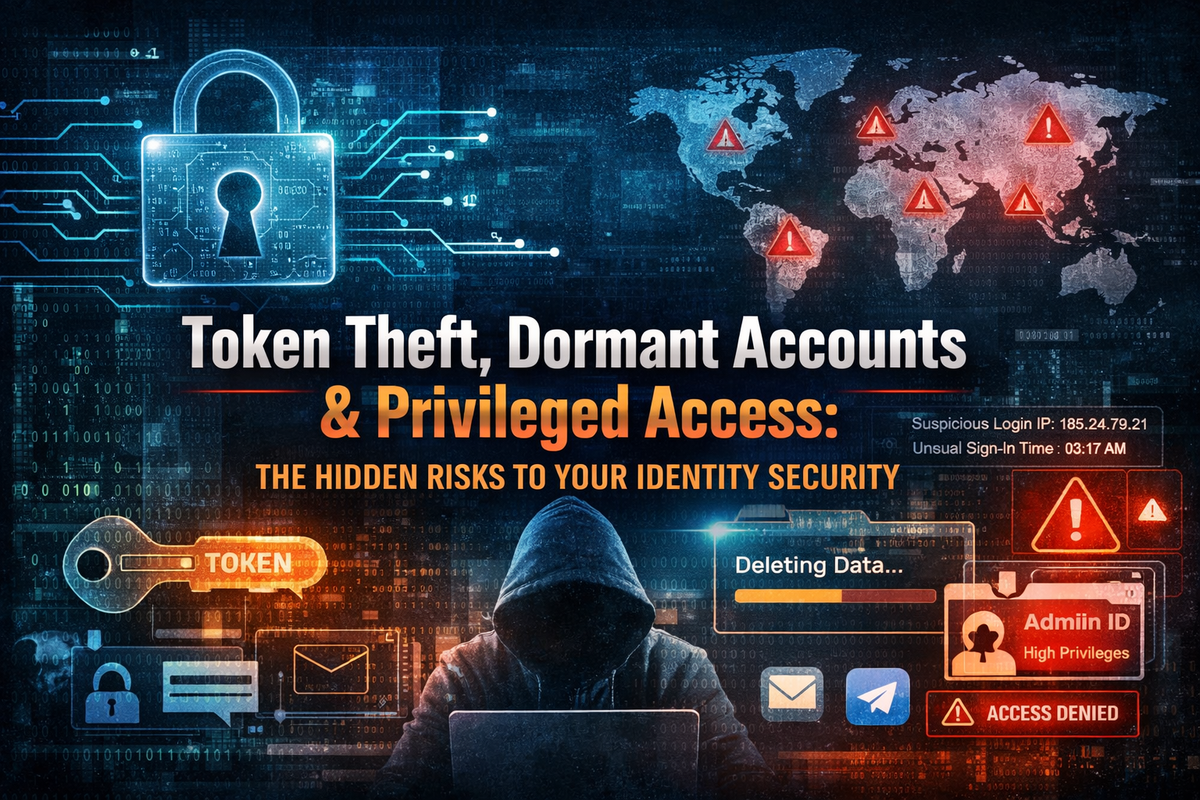
When Identity Becomes the Perimeter: Why Token Theft, Dormant Accounts, and Privileged Access Are the Real Risk
Attackers no longer need to break in the traditional way. A valid token, a forgotten account, or a single privileged session is often all it takes — and the real question becomes what happens next.
In today's environment, attackers do not always need to "break into" an organization in the traditional sense. In many cases, it is far easier, quieter, and more effective to enter through the wrong identity — or even through the right identity, but at the wrong time, from the wrong place, using a token that has already been stolen.
The real danger today no longer starts only with malware or exploits. It starts with a valid session, a dormant account that was never disabled, or a privileged user performing actions that do not match their normal behavior. When a privileged account is involved, a single abnormal event can quickly turn into mass deletion, policy tampering, tenant-wide disruption, or a full compromise of critical administrative control.
The Three Scenarios That Concern Me the Most
01 · Token Theft
When an attacker manages to steal a valid token, they may not need the password at all. From the perspective of many systems, they are already authenticated. That is exactly why organizations cannot rely only on strong passwords or MFA. They also need post-authentication detection and rapid response capabilities.
A valid token in the wrong hands can bypass many traditional assumptions about identity security. Once the attacker is inside, the question is no longer just how they logged in, but what they are doing with that access.
02 · Sign-In Using a Dormant Account
Dormant accounts are a gift to attackers. They are often less monitored, less frequently reviewed, and in some cases still retain sensitive access. Because these accounts are not part of normal daily operational visibility, suspicious use can go unnoticed for far too long.
03 · Abuse of a Highly Privileged Account
If an attacker gains access to a privileged account, or if a privileged user begins performing suspicious actions, the potential impact increases dramatically. This is where organizations must move beyond asking, "Who signed in?" and start asking:

How to Defend Against It Properly
Microsoft Defender for Identity
Surfaces suspicious behavior on sensitive identities, privilege escalation patterns, lateral movement indicators, and abnormal activity involving high-value accounts.
Privileged Identity Management (PIM)
Just-in-time activation, time-bound access, approval workflows, and tighter oversight. The fewer standing privileges you have, the less there is to steal, abuse, or misuse.
Multi Admin Approval
Sensitive administrative actions should require an additional approval step — reducing both intentional abuse and high-impact mistakes.
Automated Response
Detection alone is not enough. When an anomaly is confirmed, the platform must act — revoke sessions, disable accounts, and alert administrators immediately.

Detection Is Not Enough. Response Matters Just as Much
This is where the real difference exists between a product that only displays alerts and a platform that truly protects the environment. The goal is not just to collect logs — but to understand when behavior does not make sense, and then respond immediately.
What to Monitor
- Every wipe, delete, and other destructive administrative action
- Sign-in attempts by privileged users across all sessions
- Sign-ins from IP addresses that differ from the user's normal pattern
- Sign-ins from unusual or unexpected countries
- Sign-ins outside the user's regular working hours
- Actions that do not align with the user's day-to-day behavior baseline
How to Respond
When a real anomaly is detected, the goal is not to stop at passive alerting. Immediate response actions should include:

The Future of Protection Is Identity-Aware and Behavior-Aware
Many organizations still build security mainly around devices, networks, and perimeter-based thinking. Attackers, however, have already shifted toward identities, tokens, and privilege abuse.
A modern protection layer must combine:
- Reduced standing privilege through PIM
- Dual control for sensitive actions through Multi Admin Approval
- Identity-based threat detection through Microsoft Defender for Identity
- Automated response that can revoke sessions, disable users, and alert administrators in real time
Conclusion
Token theft, dormant account abuse, and the exploitation of highly privileged identities are three of the quietest and most dangerous risks in a modern identity environment. Organizations that focus only on passwords miss the bigger picture. Organizations that also protect the session, the behavior, and the privilege layer are operating at a much higher level of security maturity.